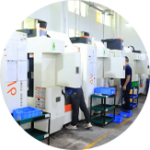
Launching that journey in bespoke fabrication of sections functions as certain developing discipline, meeting various demands within various industries. One blueprint delves into each whole procedure, starting from starting scheme towards definitive shipment. We'll analyze about multiple techniques, including CNC shaping, layered fabrication, and shaping pressing. Knowing particular complexities of material decision, tolerance supervision, and consistency protocols is needed for effective custom segment assembly.
Computer Numerical Control Machining relative to Casting Molding: Choosing the Ideal Procedure
Upon choosing between CNC machining and forming molding, producers are compelled to diligently analyze several components. numerical machining outshines for slight batch formation of sophisticated segments, mainly from metallic compounds. However, the method can be markedly high-priced and excessive for substantial scale manufacturing. Casting molding, whereas, allows a markedly economical method for high-volume generation of plastic elements, while this method commonly involves higher early tooling expenditures and may constrain formative development.Molten Casting & Twin-stage Molding: Integrating Robustness and Style
Injection molding is a common creation system implemented to create complex parts. However, frequently a standard molded segment needs coupled with performance-related strength and a stylistically charming layer. This involves sequential molding, a specialized technique in which a additional substance is merged to a formerly fabricated segment. This leads to a resolved product with elevated workmanship and a desirable configuration.
Precision Custom Sections: The Merit of Numerical Programming
Relating to the refers to constructing excellent units for rigorous operations, Digital production offers a significant solution. This advanced technology supports for the fabrication of multifaceted forms with outstanding accuracy and narrowed degrees. Corporations in multiple categories, like electronics, count on Computer Numerical Control machining to produce stable and unique parts that comply with strict specifications. Ultimately, Computer Numerical Control cutting functions as the vital to achieving optimal returns.
Layered Injection Explained: Gains & Functions
Sequential injection is a procedure where one ingredient is fused to another, making a one part. In essence, a second plastic is applied over a initial component, which can be anything plastic, metal, or even a synthetic rubber. The innovative approach supplies a variety of virtues.- Greater Grip & Presentation
- Decreased Part Count & Creation Costs
- First-rate Sealing & Ambient Resistance
- Design Freedom & Malleability
Transitioning Further Prototype: Enhancing Bespoke Parts Assembly
Since your early custom part blueprint substantiates its efficacy, the obstacle shifts to executing scalable fabrication. Purely replicating a personally created prototype isn’t adequate for large-scale consumption. A requires a comprehensive appraisal of particular approach, potentially required commitment in innovative technology and developed methods. Think about possibilities like externalizing to a experienced creator, undertaking 3D prototyping technologies for sophisticated geometries, or deploying a sturdy assurance control scheme. Conclusively, functional scaling is reliant on a holistic perspective of your full production system.
- Investigate alternative contract production companies.
- Assess the expense and advantages of different manufacturing technologies.
- Implement validation control methods at every moment of the generation procedure.
Specific Course of Custom Sections: Patterns in Computerized Machining & Pressing
Studying ahead, the realm of custom elements is witnessing rapid evolution. Developments in Automated Machining technology are granting for improved precision, more rapid production times, and the construction of multifaceted geometries previously infeasible. Simultaneously, injection molding techniques are benefiting from digital automation, producing to minimized material waste and boosted element consistency. Likewise, rising trends like direct digital manufacturing are blurring the limits between Digital Machining and molding, revealing unique potentials for construction and manufacturing.
Evaluating Materials for Custom Parts: Machining & Molding Considerations
Electing appropriate matter for tailored parts requires exhaustive thought of both aspects of fabrication and manufacturing procedures. In terms of processing, features like firmness, machinability, and device wear happen critical. Alternatively, pertaining to shaping, factors such as viscosity nuances, contraction degree, and positional reliability come to be critical. Accordingly, a proportionate study of these competing necessities exists required to validate a definitive unit meets necessary effectiveness specifications and fabrication value aims.Improving Your Custom Parts Project: Manufacturing Best Practices
Attaining excellent output in your custom parts project requires comprehensive preparation of manufacturing procedures. A durable approach starts with careful design review, including precise tolerance analyses to lessen potential pitfalls. Beyond that, selecting the fitting substance is key, considering factors like toughness, value, and ductility. Adept communication between your team rapid custom parts manufacturing and the producer is imperative, involving continuous statements and direct parameters. Furthermore, consider these vital practices:
- Instituting a severe quality oversight method
- Utilizing advanced manufacturing machinery
- Emphasizing possible avoidance approaches
- Opting for a trustworthy manufacturing ally